Approaching Parts with Compassion: Compassion-Focused Parts Work
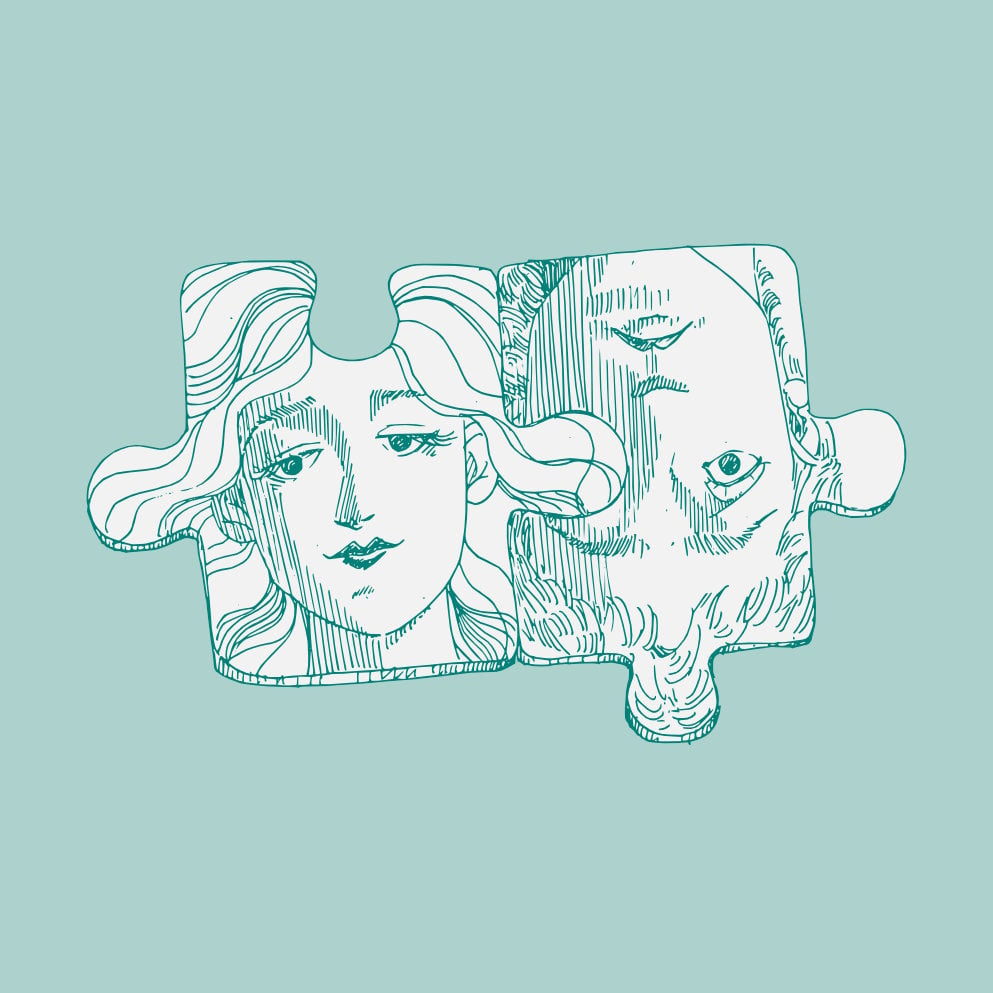
Compassion and Parts
Developing compassion is central to the therapeutic work I do with clients. I guide them in taking a compassionate stance as they make contact with their whole selves, including their internalized shame. Another way in which compassion is developed in many of my sessions is through the use of parts work. That is to say through imagined interactions between the client and aspects of themselves. Clinically, I have found that parts work lends itself to bridging the first of these flows with the other two. Most clients find giving compassion to others far easier and more natural than offering the same compassion to themselves. Through compassionate contact with parts of themselves, I have witnessed clients grow and heal.
A Brief Introduction to Parts Work
If you aren’t familiar with the term, parts work describes a style of interventions or therapies that make use of imagined interactions between the client and specific aspects or parts of themselves. There are multiple therapies that use this methodology and each has its own way of conceptualizing parts, structure, and intent. Likewise, the prominence of parts work and how integral parts work interventions are to the therapy as a whole varies. Internal family systems (IFS) and ego-state therapy are two models built entirely around parts work. IFS uses the term parts, ego-state therapy refers to them as ego-states, while schema therapy (ST) refers to them as modes. The term parts work was likely popularized by the dissemination of IFS. Parts work is sometimes used specifically to describe IFS, but is often used in a more general sense to refer to any therapy making use of interactions with aspects of the self. The latter is my meaning when I use the term in this writing. Other therapies that make use of this style of intervention include resource therapy (an emerging method based ego-state therapy) and applications of structural dissociation theory such as trauma-informed stabilization therapy (TIST). Comparisons can be drawn between parts work and other therapeutic interventions such as some applications of the gestalt empty chair intervention, transactional analysis, and components of Jungian analysis. Methods built on structural dissociation theory, tend to focus on parts of self that have become dissociated, often in response to traumatic experiences. Other models conceptualize parts as ranging from healthy to dysfunctional and integrated to dissociated in presentation. If you are unfamiliar with any of these therapies, I encourage you to explore the resources provided at the end of this article. While this article is written with a general mental health clinician audience in mind, some of it may be more clear or applicable if you have familiarity with common methods of parts work.
Compassionate Parts Work
The parts work I do with clients integrates aspects of IFS, ego-state therapy, and ST modes work, all grounded in a compassion-focused acceptance and commitment therapy (CFACT) conceptualization. In my practice, parts work is an extension of CFACT’s compassionate imagery, chairwork, and multiple selves interventions. Rather than applying specific categorical labels to parts as is done in most other parts theories, I frame parts as being nuanced and multifaceted aspects of self that do not sort into categories easily. I allow clients to identify exactly what the nature of each part is and the patterns that their parts follow. Usually, before doing any parts work with a client, we will have developed their ability to embody compassion. If clients cannot take on a compassionate self or at least be able to imagine an ideal compassion figure, then compassionate interactions during parts work will prove difficult or altogether unfruitful (for more on compassionate self and compassionate other exercises see The Compassionate Mind by Paul Gilbert– cited below).
Below, I will refer to my integration of compassion and parts work as compassionate parts work or compassion-focused parts work. This terminology is used for brevity and clarity. I am not implying use of a specific formalized modality. Also note when writing about parts it can seem as if I am presenting them as if they are real (veridical) discrete entities. This is not how I conceptualize the parts of most clients. I see parts work, like most other imaginative interventions, as metaphorical work. I reiterate to the client throughout treatment the metaphorical nature of the work and emphasize the conceptualization of parts as all being personifications of aspects or states of self. These states of being can impact the ways they perceive and respond to their internal and external experiences. I often include imagery of rejoining the part into the self before concluding experiential parts work exercises.
Being System-Identity Affirming
Clients who identify as systems, such as clients who may meet the diagnostic criteria for dissociative identity disorder (DID), experience selves that are more discrete and therefore phenomenologically and functionally more than a metaphor. Ruling out a dissociative disorder before beginning parts work can inform how you approach the method and how you talk about it with the client. Two of the most essential minimum considerations in providing system-affirming care is refraining from language and behaviors that frame systems as inherently pathological or suggest that fusion of all selves into a singular self is necessary or the only means of resolving psychological difficulties. A more system-affirming manner of introducing parts is to offer a client the explanation of parts as metaphors as one way that some people describe their experience of parts. Then, ask the client if they have a different experience and what language they would prefer to use. Clients may experience some parts in this metaphorical way and other aspects of themselves as more discrete or better described in a different way. Other verbiage may be a better fit for some clients, whether they identify as a system or not. Alternative terms may include modes, states, selves or any other terms that the client feels best describes their experience. I avoid use of imagery or other experiential methods that imply fusion of parts if a client shows signs of a system identity. Although many of the ways I discuss parts in this article are applicable for systems, I am primarily speaking in regard to parts work for non-system clients. If you suspect a client has a system identity and you do not have experience or training in assessing or working with system clients, seek consultation and training, and refer if necessary.
Four Premises That Inform My Parts Work
A few specific premises and guiding principles (informed by CFT and CFACT) inform my compassion-focused parts work. First, I always ensure parts are consenting to the intervention. Second, I assume that all parts are attempting to deal with suffering or prevent it. Third, treating parts with compassion will typically move interactions towards resolution. Finally, the primary purpose of the parts work is to build within the client the ability to respond with compassion to themselves and the many elements and presentations that manifest from within them. By providing a brief explanation of each of these premises, I hope readers can develop an understanding of ways in which they may be able to incorporate compassion work in a more intentional manner into the parts work they do with clients.
Four Premises of My Compassionate Parts Work
Always get consent from parts
Parts are coping with or trying to prevent suffering
Treating parts with compassion leads to resolution
Parts work develops the client's ability to respond with compassion
Getting Consent from Parts
When initiating parts work, I typically prompt clients to invite any parts related to the target issue or internal experience to present themselves. I stress that we aren’t making a demand for them to do so. This does mean that, occasionally, parts work doesn’t happen for that target that day. Sometimes no parts appear or none who are willing to interact. However, more often than not, in these cases, the client and I are able to gently persuade (not manipulate) a part into having some sort of interaction.
Getting permission from a part is an invitation for willingness from the client and it sets up the imagined interaction to begin from a place of respect and compassion. I am asking the client to notice all of their internal experiences at that moment and to determine whether they are willing to make contact with potentially uncomfortable experiences. In seeking consent from the part, the client is asking themselves, “Am I willing to go there, right here, right now?” Throughout the intervention, whether I am interacting with the part through the client’s present noticing self (ACT’s self-as-process or self-as-context) or I am interacting with the part directly with the client speaking as the part (what IFS calls direct access), I continue to encourage (or enact) interactions that reinforce that consent is ongoing and that any questions or requests given to the part are not demands.
Parts are Coping with Suffering or Trying to Prevent It
Two core aspects common to many understandings of compassion are a sensitivity to suffering and a caring response to that suffering. I always assume that dysfunctionally responding parts are enacting strategies that were at some time functional. What is maladaptive in current contexts was adaptive in earlier contexts, often childhood environments (as emphasized in schema therapy). In my experience, parts with dysfunctional behaviors are usually trying to do one of two things, or both: deal with suffering or prevent it from happening. Typically, the parts interventions I do will eventually include identifying and developing an understanding of 1) how the part is behaving, 2) the reason they are behaving that way, and 3) what they think will happen if they stop behaving that way. Then 4) the client will respond to the part with compassion. During the work, I encourage the client to notice the suffering they are experiencing in response to the part and the suffering of the part. I ask them to notice how the part’s suffering is impacting the part’s way of being.
Parts, from my perspective, can be described as personifications of strategies and goals and the various beliefs, memories, predictions, and sensations that inform them. They are strategies that carry the evidence of their own necessity. When contradictory evidence is available and ignored, these strategies become maladaptive. Maladaptive strategies can be quick to sacrifice long-term wellbeing for short-term relief of distress. Strategies that are effective in a narrow context can become dysfunctional when they are overgeneralized to broader contexts. Strategies born in an unpredictable, dangerous, or otherwise traumatic environment, can become disruptive in a context of safety, stability, and agency.
Responding to Parts with Compassion
Parts can initially be unpleasant in the way they speak and behave. Often, we are initiating contact with them because they are being disruptive or generating suffering within the client. From a compassionate perspective, which regards all parts as manifestations of the client, the way clients respond to parts is the way they are responding to themselves. I encourage interactions that model self-compassion, not self-criticism. Being aggressive towards a part reinforces the sort of self-critical thoughts and behaviors that the client enacts in their everyday life. If the parts interaction models self-criticism and self-shaming then it is likely to be counterproductive to the goals of treatment.
Different authors working from various theories offer different guidance on how parts should be interacted with. I have found suggestions that being forceful with parts is a reasonable, effective strategy. This can be even as aggressive as banishing a part using austere language. To me, this is the equivalent of encouraging the client to engage in thought blocking or trying to force themselves to change via authoritarian punitive self-talk. To be clear, compassion is not always soft. Compassion is also strong, courageous, and steadfast. Assertive, compassionate responding is often necessary. What this sometimes looks like is the part being told that although the client acknowledges its suffering, the client will not passively allow its attempts to push that suffering onto the client. I often guide the client into offering the part alternative ways in which the part could communicate that are more effective and compassionate. Challenging the abusive behavior of a part can be compassionate. CFT and CFACT emphasize the active nature of compassion. Compassion seeks to reduce or end suffering experienced by ourselves and others. There may be contexts within other theories in which such aggressive interaction with parts could be justified, but I find them to be at odds with acceptance- and compassion-focused frameworks.
Compassionate Interactions Promote Resolution
Building on the premise that all parts are responding to suffering, we can consider a type of part sometimes referred to as an introject. Introjects are parts that have taken on the personalities, attributes, behaviors, or sometimes even the likeness of abusive or critical people in our lives, past or present. Introject parts are not the person they are mimicking. They are the part of the client that has bought into the shaming person’s way of being as a survival strategy. They prevent ruptures in attachment to important attachment figures, by internally enacting the shaming responses that those attachment figures have perpetrated on the client. Introjects generate shame from within to avoid shame from caretakers, providers, people of authority, or loved ones. Encouraging a client to tell a part to go away or that it is unwelcome is metaphorically equivalent to suggesting to the client that they should reject any part of them they are uncomfortable with. This, again, is encouraging self-criticism and shame. I have repeatedly found that through compassionate confrontation, these parts reveal themselves as wounded and overburdened parts who deep down are exhausted or consumed by the role they have taken on. Compassionate interactions with these parts can lead to healing of wounds of shame that traumatic relationships have carved into the client’s psyche.
Not all parts are aggressive or forceful. Some wounded parts are sad or struggling to manage psychological pain. Others are succeeding in responding healthily but have become exhausted by taking on such a lion’s share of the work. All of these parts can benefit from compassionate attention. Noticing the suffering of their own parts encourages the client to have sensitivity and awareness of their own suffering with an open, caring stance. Acknowledging the strength and resilience of parts acknowledges the strength and resilience of the client. Giving compassion to wounded parts of self is a process of letting go of shame. Contacting suffering parts with compassion communicates to the client that they are allowed to hurt. It communicates that experiencing suffering is something shared by all humans. It gives them permission to feel without regarding pain as evidence of weakness or inadequacy. In a context without shame, psychological wounds can finally heal.
Parts Work Develops Compassion
Throughout the previous sections, I drew connections between the metaphorical acts of working with parts and implications of those acts for a client’s everyday life. I try to stay aware of both the metaphor and reality when working with parts. The intervention has to make sense and be meaningful in both of these simultaneous contexts to be effective. One of the most foundational measures by which I determine whether a parts intervention is effectively contributing to treatment as whole is whether it contributes to the three flows of compassion. That is to say, does it develop the client’s ability to respond to themselves and others with compassion and promote the ability and willingness of the client to receive compassion from others? The ways in which parts work develops a client’s ability to give compassion has been addressed, but parts work also develops a client’s willingness to accept compassion.
Learning to Receive Compassion
An exercise that I do with practically every client I see, but especially with any whom I use parts interventions, is the compassionate other visualization. This is an exercise used in CFT and CFACT in which the client is guided in creating an imagined ideal compassion figure who fully embodies compassion to them. I often do this exercise with clients before I begin any work on self-compassion. This is because, again, clients can often imagine someone else behaving compassionately towards them even if they have difficulty giving compassion to themselves. This exercise includes the client imagining the figure giving them compassion and the client giving compassion in return. This exercise alone develops the client’s ability to receive compassion. This figure also can be used as a resource during compassionate parts work. When the client has difficulty responding compassionately to themselves or a part, I may ask them to imagine their compassion figure being with them and the part. I then ask the client to notice how that ideal compassion figure might respond with compassion to the client or the part. The compassion figure models compassion for the client and the client is given the opportunity to receive compassion.
Compassion-focused parts work can offer another means by which the client can develop their ability to receive compassion from themselves and others. When I use parts work with a client repeatedly, some of the parts that we support towards resolution become resources for the client. This means that we can seek out that part later if their specific strengths might be useful in further parts work.
CFT describes some specific traits of the compassionate self including wisdom, strength and courage, and caring commitment. Parts that have become resources can offer wisdom, such as giving us information about other parts the client is struggling to find or understand. They can provide strength and courage when a client imagines them standing at their side when they are facing especially worrisome parts or traumatic memories. They can demonstrate caring commitment, by being ready and willing to help. Engaging with these resource parts develops the client’s ability to receive compassion, and these interactions nurture feelings of worthiness of that compassion. That worthiness is innate to being human. Shame tells us that we are unworthy of compassion. Engaging with ourselves and others compassionately helps us see the innate value of all humans including ourselves.
What Does Compassionate Parts Work Actually Do?
The sort of compassion-focused parts work I have described takes advantage of the relative strength most people have to feel compassion towards others. By imagining aspects of ourselves as, in a way, separate from ourselves (at least, separate from the compassionate observing self that is interacting with the parts) we can channel our ability to give compassion to others into giving it to ourselves. And by giving it to our parts, we develop the ability to give compassion to ourselves without the subversive pretense provided by parts work.
Conclusion
What I have described are some of the core features of my implementations of parts interventions as a means of developing compassion within clients, promoting resolution of shame, and healing of psychological wounds of traumas and adverse life experiences more broadly. Regardless of the overarching clinical rationale and theoretical basis of your parts work with clients, the intentional and thoughtful addition of compassion-focused principles can enhance the work and contribute to your client’s healing. Below are several sources for information about the theories, interventions, and therapies I referenced throughout this article. My understanding of and way of working with parts is continuously evolving as I share in it with my clients with compassion guiding my way. As always, if you have any questions, comments, or simply want to connect, feel free to contact me through the contact form at www.treydoestherapy.com/contact.
Related Reading/References:
CFACT and CFT-
Tirch, D. D., Schoendorff, B., & Silberstein, L. R. (2014). The act practitioner’s guide to the science of compassion: Tools for fostering psychological flexibility. New Harbinger Publications, Inc.
Gilbert, P. (2013). The compassionate mind: A new approach to life’s challenges. Robinson.
Various Parts Work Therapies-
Brockman, R., Simpson, S., Hayes, C., Wijngaart, R. van der, & Smout, M. (2023). Cambridge Guide to schema therapy. Cambridge University Press.
Fisher, J. (2022). Healing the fragmented selves of trauma survivors: Overcoming internal self-alienation. Routledge.
Schwartz, R. C., & Sweezy, M. (2019). Internal Family Systems Therapy, second edition. Guilford Publications.
Illustration by Mila Okta Safitri on Unsplash